
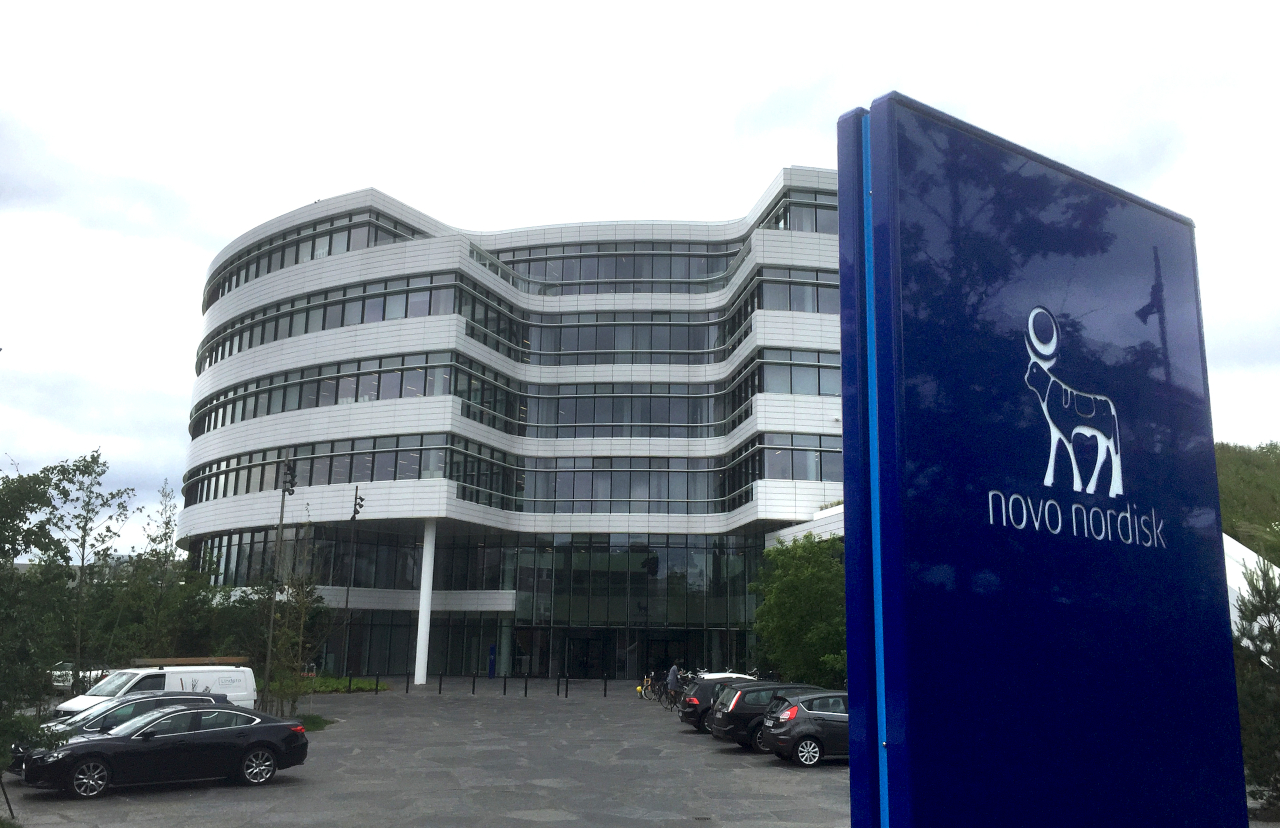
Novo Nordisk has announced a strategic partnership with OpenAI, adding a new layer to the company’s broader artificial intelligence strategy.
This is not Novo Nordisk’s first visible move into AI. The company has already used generative AI in a more structured regulatory setting through NovoScribe, a platform designed to help produce clinical study reports and other regulatory-grade documents in a tightly controlled environment.
The new OpenAI partnership points to a broader expansion.
Rather than focusing only on a narrow, rules-based workflow, this move suggests Novo Nordisk is looking at how generative AI can support knowledge work across a larger part of the organization. That could include research support, internal knowledge access, drafting assistance, and productivity gains in areas where people spend large amounts of time working across complex information.
That shift matters.
In highly regulated industries, AI usually gains traction first in environments where the process is repeatable, the inputs are structured, and the quality checks are already clear. Regulatory documentation fits that model well. It makes sense as an early use case because the boundaries are easier to define and the risk of drift is easier to monitor.
A broader partnership with OpenAI suggests the company may now be exploring where AI can help beyond those more tightly controlled processes.
That does not mean replacing expertise or removing human oversight. If anything, it highlights the opposite. The more powerful the system, the more important governance becomes. In a setting like pharma, useful AI adoption depends on clear policies for privacy, review, accountability, and acceptable use.
This is where the contrast between Novo Nordisk’s earlier AI work and this new partnership becomes especially interesting.
The earlier project showed how AI can succeed in a process with well-defined rules and reliable guardrails. The OpenAI partnership suggests the company now wants to apply AI more broadly, while still operating within the control structure that a global healthcare company requires.
From a data and AI perspective, that's the real story.
This is not just about using a new tool. It's about organizational maturity. Companies tend to move into broader AI adoption only after they have seen where automation works, where human review remains essential, and what kind of governance needs to be in place before scaling further.
Novo Nordisk appears to be moving from targeted AI use toward a more integrated AI strategy.
For people working in data, analytics, and AI, that makes this worth watching. It offers a real-world example of how a large healthcare company may move from focused automation in one high-structure area to wider AI deployment across the enterprise.
Why this matters
For analytics professionals, this announcement stands out for three reasons:
- It shows a likely progression path for enterprise AI adoption.
Many organizations begin with narrow, rules-based use cases before moving into broader generative AI applications. - It reinforces the role of governance.
In regulated industries, AI value depends on controls, not just capability. - It highlights the difference between automation and strategy.
A one-off AI project can improve a process. A broader partnership signals something larger: a shift toward AI as part of the operating model.
Final Thoughts
Novo Nordisk’s new OpenAI partnership is worth paying attention to not only because of the companies involved, but because of what it may signal about the company’s next phase of AI adoption.
The earlier regulatory documentation work showed what AI can do in a tightly controlled environment. This new partnership suggests Novo Nordisk may now be extending that thinking into a wider set of business and knowledge workflows.
That makes it a useful case study for anyone interested in applied AI, enterprise governance, and how large organizations scale AI beyond isolated pilot projects.
OpenAI Partnership Sources
Novo Nordisk Press Release
Fierce Pharma Coverage
NovoScribe Sources
MongoDB Case Study: From 12 Weeks to 10 Minutes
AWS Case Study: A faster way to bring enterprise data to generative AI
Video: How Novo Nordisk Accelerates Time To Value with GenAI and MongoDB
Video: Novo Nordisk’s AI Revolution: Anthropic, MongoDB & AWS in Pharma